CASA BLISS / CUSTOMER STORY
Casa Bliss grew online sales by 32%.
More shoppers finding the store. More of them placing orders. How an independent Northern Ontario retailer turned better product discovery, flexible payments, and connected delivery into online growth.


Results reported around three months after launch. Figures reflect Casa Bliss’s experience and reporting periods. About these results
01 / THE RETAILER
A neighbourhood store competing with the chains.
For Raheel Merchant, Casa Bliss is built around a simple idea: make people feel at home. Customers come in to talk, get recommendations, and spend time with a team that shares their enthusiasm for cannabis. TVs, conversation, and a welcoming atmosphere make the store feel closer to a living room than a transaction counter.
Raheel brought years of retail experience from running A&W franchises, then focused his cannabis business on Northern Ontario, where he already had business relationships and community roots. At the time of the interview, Casa Bliss operated in Sudbury and Timmins.
Neither market was an easy win. Raheel counted 33 cannabis stores in Sudbury and seven in Timmins, where he described Casa Bliss as the only independent among chains. His approach was to give shoppers a reason to choose a local retailer: knowledgeable people, distinctive products, and a store they wanted to return to.
His phrase for it was “find your vibe, find your tribe.” The next challenge was bringing that same depth of product knowledge and convenience to the online store.
A local identity shoppers recognize.
STORE PHOTOS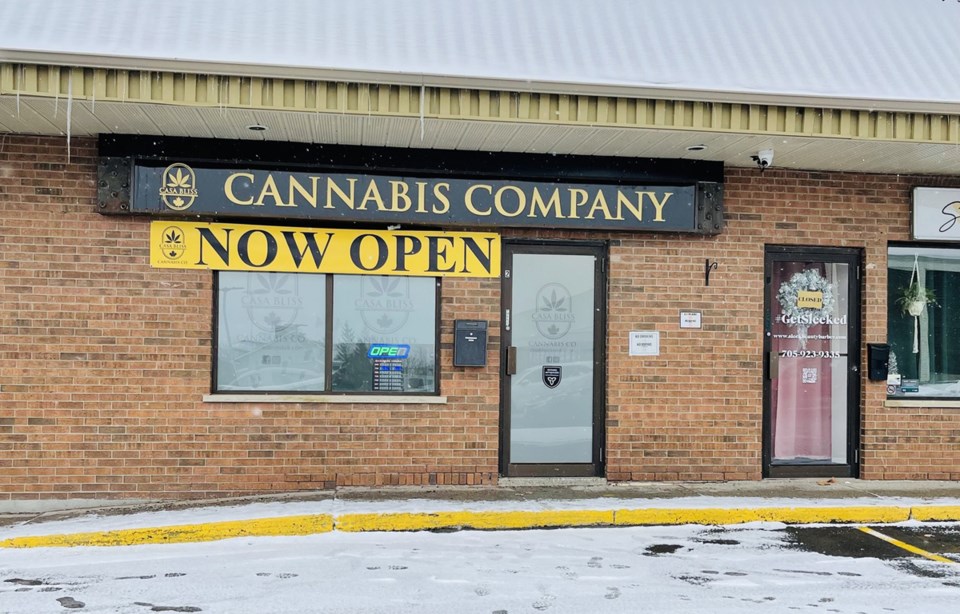
02 / THE CHALLENGE
The store stood out. The website needed to work harder.
Online sales were already a substantial part of the business. Raheel estimated that eCommerce accounted for roughly 30% to 40% of sales in Timmins. Improving the website meant improving a revenue channel the store depended on every day.
Limited SEO control
Casa Bliss’s previous Dutchie setup used an embedded menu. Raheel wanted more control over individual product pages, detailed descriptions, images, and the links connecting them. He felt the existing setup limited what his team could achieve with its SEO work.
Too little information to help shoppers choose
A product name, price, and standard supplier description could not communicate everything Casa Bliss knew about its inventory. Customers interested in terpenes, cannabinoid content, and the products available at their local store needed more useful detail.
Customers ready to buy, but unable to pay
Some card payments failed because of billing-address mismatches or flagged transactions. When a shopper had already chosen their products, a failed payment could bring the order to a stop.
Delivery tools that did not give the full picture
Casa Bliss already offered delivery, but used a separate route-planning app. Raheel could not easily see who was handling each order, what had been completed, or where delays were happening. More delivery orders needed to be manageable for both staff and drivers.
03 / DISCOVERY & SEO
Give every product a page worth finding.
Moving to Breadstack gave Casa Bliss individual product pages that could carry the information its team wanted shoppers to find. Product descriptions, images, and relevant internal links became part of the retailer’s own website, with more control over how the catalogue was presented.
Terpenes were a practical example. Raheel wanted to describe a strain’s limonene content and connect shoppers with other relevant products across the catalogue. That made the menu more useful to someone looking for particular product characteristics, while giving search engines clearer information about what the store carried.
This was not simply a software switch. Raheel and his manager invested time in maintaining product data in Greenline, including THC, CBD, and terpene information for display on the Breadstack website. They could keep details separate by store, which mattered when different locations received different batches.
A single THC percentage applied across every location could be misleading when the actual batches differed. Store-specific details helped shoppers make a better-informed choice and brought more of the team’s in-store expertise into the online experience.
Raheel also valued being able to improve the information associated with product imagery. Together, richer pages, relevant links, and better product detail gave Casa Bliss a stronger foundation for discoverability. Around three months after launch, he reported more than 50% growth in website visitors.
Explore Breadstack eCommerce or see how product SEO supports discovery.
04 / PAYMENTS & CHECKOUT
A failed card did not have to mean a lost order.
Casa Bliss added Interac e-Transfer as another way to pay. For customers whose cards were declined, including those with billing-address problems, it offered a way to complete the purchase without abandoning their chosen products.
Raheel initially expected the option to create more work. Instead, he watched adoption grow from roughly one payment a week at launch, to ten a week, and eventually about ten a day by the interview. He also reported lower processing costs on those payments, helping the business keep more of the revenue.
The workflow stayed clear. Each store had its own payment-notification email address. Staff checked that the transfer had succeeded before processing the order. Prepaid pickup orders could be handled in Greenline’s order hub; delivery orders moved into Breadstack’s delivery workflow.
- 01Choose e-TransferCustomer selects an alternative to card payment.
- 02Confirm paymentStaff check the store’s successful-transfer email.
- 03Prepare the orderThe team processes and packs the paid order.
For Casa Bliss, payment flexibility addressed a specific point of friction: the customer wanted the order, but needed another way to pay.
05 / CONNECTED DELIVERY
More control from the order queue to the doorstep.
Breadstack Fulfillment, also known as Canfleet, connected delivery tasks, routing, and visibility in one workflow. Casa Bliss no longer had to rely on a separate route planner to organize the driving sequence.
The store worked in hourly delivery windows, with an order cutoff 15 minutes before each window. Staff queued and packed orders, then drivers collected the prepared bags and assigned the tasks to themselves on the store laptop. The assigned deliveries appeared in their phone app.
Routes were optimized automatically after assignment. Drivers could open the next stop in Waze or Google Maps. This mattered on busy runs, when a driver could collect 15 or 20 deliveries at once. Raheel was clear that heavy volumes could still make the intended windows difficult to meet; the system helped the team organize the work and understand delays.
- 01Pack the order
Staff queue the delivery in Breadstack and prepare it for collection.
- 02Assign the driver
Drivers assign the prepared tasks to themselves on the store laptop.
- 03Follow the route
Canfleet optimizes the assigned route and opens directions in Waze or Google Maps.
- 04See the progress
Management can review locations, completed tasks, and time spent on each delivery.
For Raheel, the biggest operational benefit was being able to see the whole picture. He could review driver locations, completed tasks, time spent on each delivery, and efficiency reports without piecing the information together across tools. That made it easier to identify bottlenecks and discuss late deliveries with the team.
Checkout also introduced a delivery-tipping option that Casa Bliss had not offered through its previous system. Raheel said drivers welcomed it, with some occasionally earning $200 to $300 in tips in a day. Those were individual busy-day examples, not a daily average.
06 / ONBOARDING & SUPPORT
A hands-on team behind a high-stakes switch.
Changing platforms meant changing a channel responsible for a significant share of the business. Raheel needed the launch to be coordinated, with clear responsibilities for both his team and Breadstack.
He credited Ross, Leah, and Ariel with keeping communication consistent, explaining what needed to happen, and following up with managers when he delegated tasks. He could stay focused on running the business while his team worked through the launch.
There were hiccups, as Raheel acknowledged. What mattered was how they were handled: promptly, with clear updates. He said he was never left wondering what was happening or fearing a major loss of online sales because of the transition.
07 / THE RESULTS
More traffic became more online revenue.
Casa Bliss launched in early December. Around three months later, Raheel reported more than 50% growth in web visitors and online sales growth of approximately 32% year over year. January alone generated roughly $20,000 more online revenue than the previous January.
The traffic increase was only part of the story. Raheel described conversion from new visitors at over 12%, compared with roughly 6% before the switch. More shoppers were reaching the website, and he was seeing a larger share complete a purchase.
The operational changes supported that growth: product information helped shoppers choose, e-Transfer gave them another way to pay, and connected delivery tools helped staff fulfill orders with better visibility.
When asked what mattered most, Raheel put it plainly: “I’m making more money.” The improvements were valuable because they helped grow a major part of his business.
08 / THE RETAILER TAKEAWAY
Put your store’s strengths to work online.
Casa Bliss did not abandon the local identity that made its stores distinctive. It gave that identity a better online foundation: more useful product pages, fewer payment barriers, and a delivery workflow the team could manage as orders grew.
“It’s allowing me to increase one of the biggest parts of my business in sales, and it’s allowing me to do it at a much faster rate than I thought was possible.”
Make your product expertise searchable.
Give shoppers useful information about what you carry. Maintain the details, keep them accurate for each store, and use product pages that your team can improve.
Look closely at where ready-to-buy customers get stuck.
For Casa Bliss, a second payment option addressed a real checkout problem. Use your store’s customer questions and failed-order patterns to find the friction worth fixing.
Connect growth to the way your team works.
More online orders need clear handoffs. Make it easy for staff to confirm payment, prepare orders, assign deliveries, and see what has been completed.
Choose a partner that stays involved.
A platform change is also an operational change. Clear communication, task ownership, and responsive support helped Casa Bliss make the transition with confidence.
THE INTERVIEW
Hear the story from Raheel Merchant.
Watch Casa Bliss’s owner discuss growing online sales, improving product discovery, and making payments and delivery easier for customers and staff.