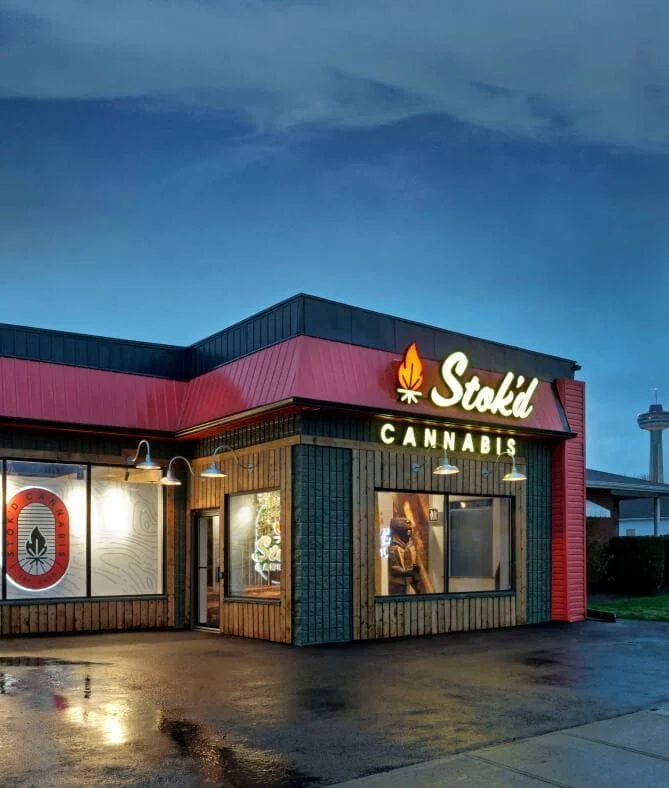
CUSTOMER STORY / THE WESTORE CANNABIS
The WeStore added $50k in monthly sales. And saved $100k a year.
Better product visibility brought in more orders. Automated dispatch reduced the work behind each delivery. The WeStore grew both sides of the business while protecting its promise of delivery in under 60 minutes.

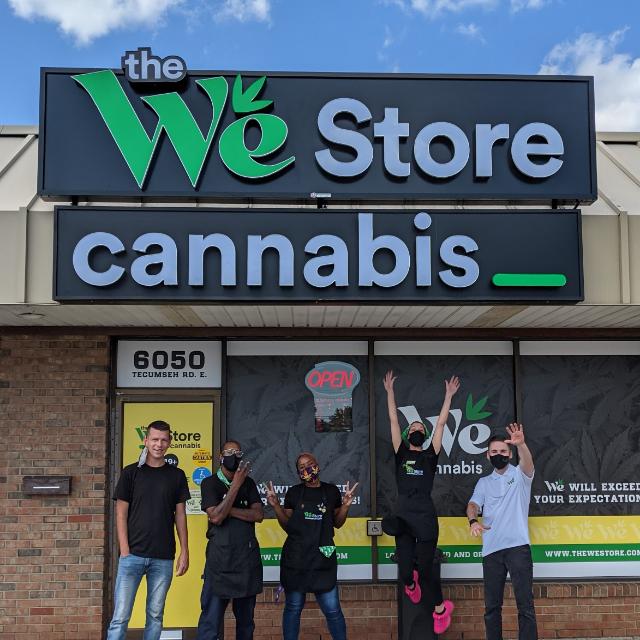
Results reported by The WeStore. Timeframes vary by measure. About these results
THE RETAILER
A delivery promise built around the guest.
For The WeStore, convenience is part of hospitality. Palash Tiwari, the company’s co-CEO, calls the people who shop with them guests. Whether someone visits a store or orders from home, the goal is the same: knowledgeable help, a straightforward purchase, and a welcome that makes them want to return.
The Southwestern Ontario retailer comes from a group with nearly 50 years of experience in retail and hospitality. It brought that service mindset to cannabis, investing early in delivery and maintaining a promise to get orders to guests in under 60 minutes.
At the time of the interview, Palash described a wider group of 12 retail outlets across three brands, with 14 active delivery vehicles and a backup. Deliveries ran from 9 a.m. to 11 p.m. That was a substantial operation to coordinate, and the guest experience could not depend on staff keeping up with paperwork.
“All I want is I go to a website, I place the order and my doorbell rings under an hour. That’s it.”
THE CHALLENGE
Good service. Technology that made it harder to deliver.
The WeStore already knew the experience it wanted to offer. Its previous online menu and delivery processes made that experience harder to manage across locations.
Lost SEO visibility.
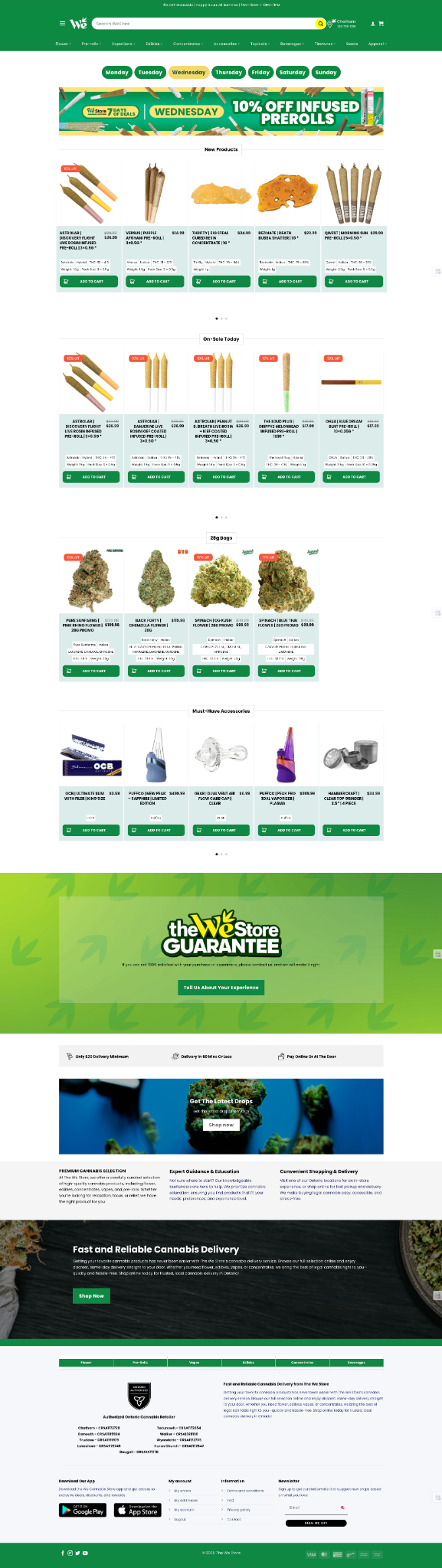
Palash wanted shoppers searching for a specific product to find The WeStore’s own website. With the previous embedded menu, he felt product discovery benefited the menu provider instead. The retailer was missing opportunities to turn product searches into direct orders.
Limited access to customer and shopping data.
The team could not follow the online journey with the visibility it needed. That limited its ability to understand where shoppers came from, what they wanted, and where the experience needed improvement. Palash wanted control over the relationship, from product suggestions and promotions to loyalty integration and refunds.
Manual work behind every delivery.
Dispatch required ongoing supervision. Drivers collected signatures on stickers attached to receipts, then kept those records in case a chargeback arrived months later. Staff also repeated work by setting up promotions in the POS and recreating them online. As orders grew, those tasks became more expensive to maintain.
01 / GET FOUND. WIN THE ORDER.
Shoppers could find the products. The WeStore could win the sale.
Breadstack gave The WeStore a branded eCommerce experience with product pages on its own domain. Those product pages could be indexed for the products, brands, and strains shoppers were already looking for, helping discovery lead directly to the retailer.
For Palash, the opportunity was practical: when someone searched for a familiar product, The WeStore could appear, show what was available, and back it up with a delivery promise the customer understood. The team also gained more visibility into the customer journey instead of relying on a menu it could not fully track.
The interview connects that stronger discoverability with more orders and a higher conversion rate. Palash described conversion rising from roughly 13% to 21.9%. In the smaller, free-delivery zone, he reported 13% to 15% growth in average cart value. More shoppers were ordering, and those delivery baskets were getting larger.
02 / AUTOMATE THE HANDOFF
More deliveries. No dedicated dispatcher.
The WeStore’s teams kept preparing orders locally. Breadstack connected that store workflow to automatic driver assignment, so a completed order no longer needed a dispatcher to move it to the next step.
Palash used the Chatham store as an example. With two drivers on the road, the system could assign a packed order to the closest available driver. Staff marked the order ready, and the request went to the driver’s phone.
- 01Order arrives
Staff receive an alert on the Breadstack tablet.
- 02Team packs it
The store marks the order ready for delivery.
- 03Driver is assigned
Automatic dispatch sends it to the closest available driver.
- 04Delivery is recorded
Photos and a digital signature complete the handoff.
reported by Palash Tiwari
Replace constant coordination with automatic assignment.
Palash estimated $100,000 a year in dispatch labour savings.
The savings came from removing the need for a dispatcher sitting at a desk for 12 hours a day, week after week. The stores still had their own drivers and teams. Automation reduced the coordination work around them.
Explore Breadstack DeliveryKeep delivery records without keeping paper.
Photos and digital signatures replaced stickers and stored receipts.
Drivers recorded the order at pickup, photographed delivery, and collected a signature on their phone. That gave the team a digital record to refer to when a delivery question or dispute came up, without maintaining a paper archive.
See where the time and delivery costs go.
Vehicle locations, distance, driving time, idle time, and delivery duration in one place.
Palash could check active deliveries on a map and use operational reporting to understand the cost of serving each order. For a business making an under-60-minute promise, that visibility helped the team manage both service and efficiency.
Make the workflow easy for the team to learn.
Palash reported spending no more than 10 minutes training an individual driver.
In-store, audible tablet alerts helped make sure new orders were noticed. Staff acknowledged the order, packed it, and marked it ready. Drivers then followed the workflow in the Canfleet app. Many of the group’s 30-plus drivers learned by accompanying another driver on deliveries.
THE RESULTS
About $50,000 more in monthly sales, with less manual work.
Within two weeks of the final store in that rollout going live, Palash reported approximately $12,000 to $13,000 more in weekly net sales and deliveries. That represented roughly $50,000 in additional monthly sales.
Delivery volume was also stronger. Palash reported approximately 1,000 deliveries a week, compared with 700 to 725 in the same period the previous year. At one location, weekly deliveries had risen from roughly 115 to 120 to at least 220 after four weeks.
The first store switched to Breadstack saw a reported 60% increase in delivery revenue. Results varied by location, but the business was seeing growth alongside the operational improvements, rather than having to add the same amount of manual coordination for every new order.
- approximate increase in monthly sales
- ~$50k
- estimated annual savings from removing dedicated dispatch
- $100k
- larger average carts in the smaller delivery zone
- 13% to 15%
- reported online conversion, up from approximately 13%
- ~21.9%
- weekly deliveries at one store, up from about 115 to 120
- 220+
03 / KEEP PROMOTIONS IN SYNC
Set up the promotion once. Save four hours a week.
The efficiency gains extended beyond dispatch. Previously, a promotion entered in the POS had to be recreated in the online store. Breadstack pulled the promotions through from The WeStore’s POS, removing that duplicate setup.
Palash estimated this saved four hours every week. At that pace, it is the equivalent of 208 hours over a full year, time the team could put toward running the business rather than repeating the same administration.
It also supported the experience Palash wanted across channels: a customer should recognize the same business whether they shop in-store or online. Keeping promotions connected helped the team maintain that consistency with less manual upkeep.
04 / BRING THE BUDTENDER ONLINE
The hospitality did not stop at the checkout.
For The WeStore, delivery was an extension of the store, not simply a package moving from one address to another. Palash described spending around $16 per delivery to support professionalism, driver training, clean vehicles, and the under-60-minute promise. The goal was to make guests feel as well looked after at their door as they did at the counter.
Breadstack’s live chat brought another part of that experience online. A real budtender could greet a shopper, answer a question, and help with product selection. For Palash, that mattered because customers often trust a particular staff member’s knowledge and recommendations.
The team was still refining how to staff live chat. At the time of the interview, it was experimenting with a shared touchscreen console that available staff could use during quieter periods. The opportunity was clear, but Palash was candid that the operating process was still a work in progress.
Post-delivery feedback added another way to understand the experience. Palash reported seeing more five-star Google reviews, giving the team another signal of how guests felt about the service.
THE ROLLOUT
Change the system. Keep the service promise.
The WeStore rolled out Breadstack gradually over roughly nine months. Palash wanted to confirm each location could deliver the intended experience before moving on to the next, rather than changing the entire group at once.
That approach reflected his engineering background and focus on continuous improvement. Driver workflows, order handling, delivery visibility, and the guest experience all had to work together. Eight WeStore locations were live at the time of Palash’s interview.
The outcome was not a new service model imposed on the business. It was technology that supported the model The WeStore already believed in: make products easier to find, make ordering convenient, and deliver with the same care guests expect in-store.
LESSONS FOR RETAILERS
Grow the orders. Remove the work that holds them back.
The WeStore’s story gives other retailers four practical places to look for growth and operational headroom.
Make product searches lead to your store.
Check whether shoppers looking for the products you carry can find your own product pages. Treat discoverability as part of customer acquisition, then measure what happens between a visit and an order.
Automate the repetitive work around delivery.
Look at driver assignment, proof of delivery, and order handoffs. The opportunity is to handle more orders without multiplying the same coordination tasks.
Understand the cost of the experience you promise.
Track delivery time, distance, and idle time alongside revenue and basket value. The WeStore invested in service quality while reducing the manual work needed to provide it.
Bring your strongest in-store experience online.
Keep branding, promotions, product advice, and delivery service connected. Define who owns each part of that experience, including how live chat is staffed, so the technology supports a reliable service.
THE INTERVIEW
Hear the story from Palash Tiwari.
Watch The WeStore’s co-CEO discuss growing delivery sales, reducing manual work, and keeping the guest experience at the centre of the business.